Why Sports Use Different Ball Shapes
Why sports use different ball shapes, and how their design affects carrying, passing and control so you can understand the actions each game rewards.
Why sports use different ball shapes becomes clear when a player tries to control one under pressure: a sphere offers a smooth route for rolling and redirection, while an oval can turn a landing into a contested decision. The shape changes what players can do quickly, but the rules determine which of those actions are legal.
Why sports use different ball shapes
A ball is designed for the contacts a sport permits. Players may kick, carry, throw, strike or control it with a stick, and the rules give those actions their tactical purpose. Shape influences how easily the ball can be gripped, redirected or predicted; it does not decide the game by itself.
A sphere has no long axis to align before contact. An elongated ball does, so its flight and bounce depend more strongly on its orientation and how it lands. Surface, spin and conditions matter too, but the shape helps explain why a familiar action in one sport can be awkward in another.
A spherical ball suits repeated rolling and redirection
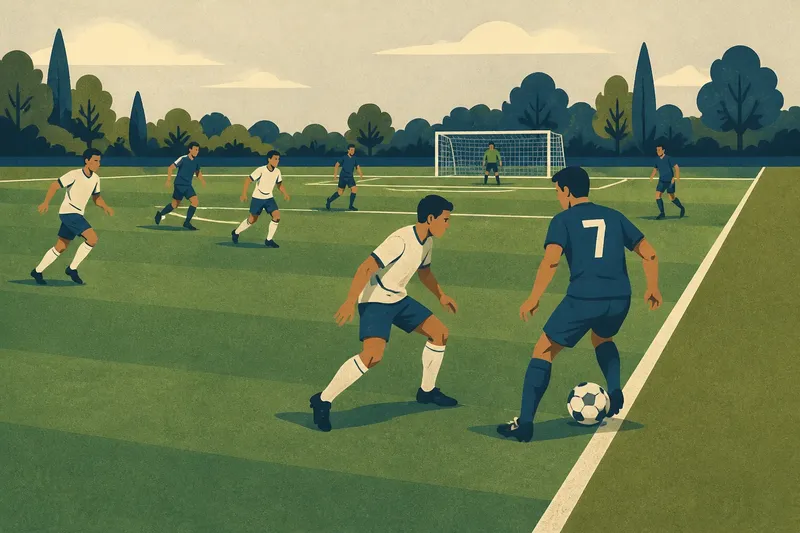
In association football, players commonly pass, stop and redirect the ball with their feet. Its spherical form supports movement along the ground and lets a player approach from many angles without first finding a particular end or axis.
Other sports use the same basic form for different contacts. Basketball players dribble, pass and shoot with their hands; tennis players strike the ball with rackets. The rules and permitted tools give each sport its character. The sphere simply provides an object that can be sent in changing directions without a pronounced front or back.
That does not mean a round ball always follows a neat line. Spin, the surface and the force or angle of contact can alter its path. Its useful distinction is that the player need not orient a long axis before trying to control it.
An oval ball suits carrying and angled release
Rugby and American football feature carrying and hand-passing in ways that make an elongated ball useful. It can sit against the body under an arm, and its shape gives a thrower an axis to work with when releasing a rotating pass. The exact rules and tactics differ between the codes, so the shared outline does not make the equipment or play interchangeable.
The ball’s orientation also matters at the moment it meets the ground. A sphere tends to present a similar curved profile whichever way it lands; an oval can strike on an end, side or angle. That can make possession less settled and give nearby players a reason to move towards the landing point rather than assume the ball will roll in a familiar direction.
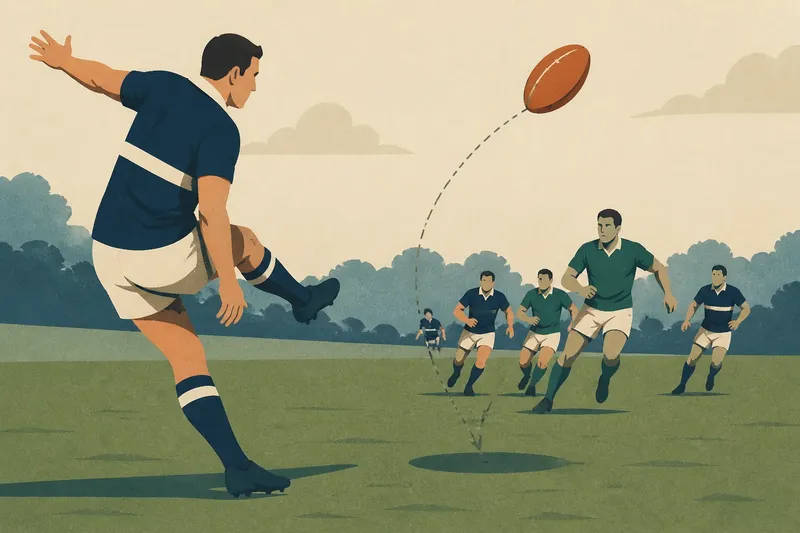
Say you are watching a rugby match and a player kicks an oval ball into open space. The receiving side has to judge its flight, move towards the likely landing area and prepare for a bounce that depends on the ball’s angle. The observable result is a contest for possession shaped by positioning as well as the kick.
Rules and contact can matter as much as the outline
Two balls with similar shapes can support different play because rules define what players may do with them. Rugby and American football both use oval balls, but their passing, possession and kicking rules create different decisions. Shape is a clue to the intended handling, not a complete description of the sport.
Nor is geometry the only feature that matters. A cricket ball is spherical, but its seam and surface are relevant to bowling and batting. Field hockey also uses a sphere, with a stick and rules that favour controlled movement close to the ground. To understand a ball in play, consider its shape alongside its surface, the permitted contact and the space players have to use.
How does ball shape affect handling and play?
Why can an oval ball bounce in different directions?
Its long axis and ends mean that the angle of landing can change which part strikes the ground first. A small change in orientation can produce a different bounce, so players must react to the ball they actually see rather than assume a uniform roll.
Does a spherical ball always roll straight?
No. Spin, slope, surface and the force of a kick or strike can all alter its path. A sphere has no long axis to align, but that does not make every roll identical.
Does an oval shape make a ball easier to carry?
It can sit against the body in a way that suits carrying, but the rules decide whether carrying is allowed and how possession may advance. A ball’s shape suggests possible handling; it does not grant permission to use it.
Could one ball shape suit every sport?
A single shape could be used in different games, but it would change the balance of actions. A sphere would alter the handling and bounce of a carrying game, while an oval would make repeated rolling and redirection less straightforward in a foot-led game.
How can you read a ball’s role while watching a game?
Follow the action immediately after a player gains control. Does the player roll or redirect the ball, carry it into space, or strike it towards a target? That sequence connects equipment to rules and tactics more directly than the shape alone.
- Observe whether players mainly move the ball along the ground; if rolling and redirection recur, consider how the sphere supports those contacts, then compare the result with what the rules allow.
- Observe whether players tuck the ball against the body; if carrying is permitted and common, note how the shape supports that action, then check whether the rules restrict how possession can advance.
- Observe how players release passes by hand; if the ball rotates along a clear axis, consider how its elongated form relates to the throw, then distinguish that design feature from the code’s passing rules.
- Observe the first bounce after a kick or throw; if the ball changes direction at an angle, note its orientation at landing, then watch how nearby players adjust their positions.
- Observe whether a bat, racket or stick makes most contacts; if so, look beyond the outline to the tool and permitted contact, then identify which actions the rules allow.
- Observe whether the ball is controlled close to the ground; if that pattern recurs, consider how the surface and permitted tool shape the play, then compare it with airborne or carrying actions in the same game.
Imagine a viewer trying to explain a rugby kick to a friend. They notice an oval ball kicked into open space, then watch the receiving players move towards its projected landing rather than directly towards its current position. They check the bounce and see it turn away from the first runner; the useful explanation is that the players had to judge both the flight and the ball’s orientation at impact, while the rules made the ensuing contest relevant.
Why sports use different ball shapes is therefore a question about the actions a sport organises, not a contest between one shape and another. Next time you watch, track what players do with the ball between gaining possession and making their next move; that short sequence often reveals how equipment and rules work together.